HOME
Sponsorship
School Store
NET PRIMARY
Internet Lessons
PRIMARY SCHOOL
Main
Student's Corner
Teacher's Lounge
Parent's Corner
DEPARTMENTS
English
Electives
ESL
Foreign Languages
Mathematics
Physical Education
ROTC
Science
Social Studies
Special Education.
Teacher's Lounge
Parent's Corner 
RESOURCES
Colleges
Distance Learning
Expert Sites
Education Sites
Fun Room
Guidance
Homework Helpers
Home School
Lesson Plans
Library
Non-profits
Commercial Sites
Security 
Skills Center
School Evaluations
Tutors
Worksheets
Site problem 
Tell a Friend 
Submit a Link
Contact Us
Add To Favorites

Search this site or the web powered by FreeFind

Site search
Web search

Some graphics reproduced using Print Shop Deluxe, Broderbund Software, Inc. All Rights Reserved used by permission.
The Classroom does not claim all descriptions of sites to be their own words.

The Classroom  makes no promises or representations about the gadgets on this site as to quality. content or  performance

The evolution of the brain not only overshot the needs of prehistoric man, it is the only example of evolution providing a specie with an organ which it does not know how to useArthur Koestler (English writer and critic, 1905-1938)

Prehistoric History
3.5 Million - 3501 B.C.

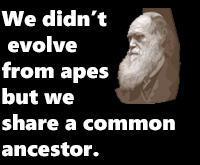
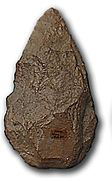
Early man evolved from Africa many millions of years ago. A nomadic people they roamed from place to place in search of food, water or shelter. They have often been called "Cavemen" but in reality they lived in many types of shelter such as trees, huts or in the open. They were experts at survival and learned quickly how to use nature to protect themselves from the environment. The two most notable early members of our family were the Neanderthal and Cro-Magnon people (a name we gave them). The three periods of early man are Stone Age, Bronze Age and Iron Age. They received their names from the tools humans developed and used. Each age was an improvement over the previous age and humans developed new ways of hunting, thinking and growing crops. Eventually they settled into villages and began to develop new technologies and more elaborate cultures. The period ended when humans developed the ability to read and write.
Anthropology
The scientific study of human beings and their many different cultures. Source: Scientific
Archaeology
"The scientific study of past human cultures by analyzing the material remains (sites and artifacts) that people left behind." Source: Teaching Archeology
Human Evolution
Information on human development and growth over millions of years
Great Human Ages
Information on early man's development of Stone, Bronze and Iron as a tool for survival.

Back To Top!