Search this site or the web powered by FreeFind

Site search
Web search

Home
Parents
Secondary School
Primary School
Secondary Depts.
Primary Depts.
Secondary Teachers
Primary Teachers
Secondary Students
Primary Students
Secondary Subjects
Primary Subjects
Administration
Cafeteria
Transportation
Contact Us
Sponsorship
 
Some graphics reproduced using Print Shop Deluxe, Broderbund Software, Inc. All Rights Reserved used by permission.
The Classroom does not claim all descriptions of sites to be their own words.

The Classroom  makes no promises or representations about the gadgets on this site as to quality. content or  performance

A teacher who is attempting to teach without inspiring the pupil with a desire to learn is hammering on cold iron."
Horace Mann

Public Schools

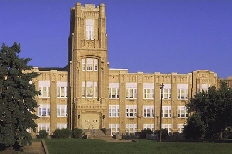
Public Education"State schools, also known in Scotland, the United States and Canada as public schools, generally refer to primary or secondary schools mandated for or offered to all children by the government, whether national, regional, or local, provided by an institution of civil government, and paid for, in whole or in part, by state taxes. The term may also refer to institutions of post-secondary education funded, in whole or in part, and overseen by government This includes basic education, kindergarten to twelfth grade, also referred to as primary and secondary education, as well as post-secondary educational institutions such as universities, colleges, and technical schools funded and overseen by government rather than private entities. State education is inclusive, both in its treatment of students and in that enfranchisement for the government of public education is as broad as for government generally. It is often organized and operated to be a deliberate model of the civil community in which it functions. Although typically provided to groups of students in classrooms in a central school, it may be provided in-home, employing visiting teachers,and/or supervising teachers. It can also be provided in non-school, non-home settings, such as shopping mall space. State education is generally available to all. In most countries, it is compulsory for children to attend school up to a certain age, but the option of attending private school is open to many. In the case of private schooling, schools operate independently of the state and generally defray their costs (or even make a profit) by charging parents tuition fees. The funding for state schools, on the other hand, is provided by tax revenues, so that even individuals who do not attend school (or whose dependents do not attend school) help to ensure that society is educated. In poverty stricken societies, authorities are often lax on compulsory school attendance because the children there are valuable laborers. It is these same children whose income-securing labor cannot be forfeited to allow for school attendance. The term "public education" when applied to state schools is not synonymous with the term "publicly funded education". Government may make a public policy decision that it wants to have some financial resources distributed in support of, and it may want to have some control over, the provision of private education. Grants-in-aid of private schools and voucher systems provide examples of publicly funded private education. Conversely, a state school (including one run by a school district) may rely heavily on private funding such as high fees or private donations and still be considered state by virtue of governmental ownership and control."Source: Wikipedia
In fall 2010, nearly 49.4 million students will attend public elementary and secondary schools. Of these, 34.7 million will be in prekindergarten through 8th grade and 14.7 million will be in grades 9 through 12 . An additional 5.8 million students are expected to attend private schools this fall."
Source:
National Center for Education Statistics


Future of Freedom Foundation The Death of Public Education Boston Globe

A Parent's Concern and Suggestions

NPR-Americans Willing to Pay for Improving Schools

Public Schools Review-Data-Information  
EBooks/Articles/Journals/Legal Opinions
Why Education is Broken
By Isamu Fukui
Reinventing Public Education
By P.T. Hill, L. C. Pierce, J. W. Guthrie
The Story of American Public Education
By Sarah Mondale
Google Scholarly Articles Education Articles Public School Review
Google Books Google Legal Opinions and Journals

Open Directory Gateway

K through 12: Public Schools | School Choice | Higher Education | Behavior Medication | Bilingual Education | Children's Opinions | Clothing and Uniforms@ | Commercialism | Corporal Punishment@ | Creation and Evolution | Development@ | Diploma Mills | Education Reform | Equity | Grade Inflation | Literacy | Policy | School Choice | School Finance | School Safety@ | School Violence@ | Screening or Banning of Reading Materials@ | Sex Education | Sports | Standardized Testing
Yahoo Directory Gateway
Elementary Schools | Middle Schools | High Schools | Boarding | Christian@ | Democratic | Gifted Youth@ | International | Jewish@ | Magnet | Montessori@ | Native American@ | Special Education@ | Sports Academies | Summer Enrichment Programs@ | Waldorf@ | Web Directories
Wikipedia Gateway
Education in the United States | Public high school | Education Index Free education | List of education articles by country 
Videos    
Edutopia TED PBS
 
Charter Schools vs. Public Schools
 
Bringing New Ideas to Public Education

Educating for today and tomorrow

Back To Top!