HOME
Sponsorship
School Store
NET PRIMARY
Internet Lessons
PRIMARY SCHOOL
Main
Student's Corner
Teacher's Lounge
Parent's Corner
DEPARTMENTS
English
Electives
ESL
Foreign Languages
Mathematics
Physical Education
ROTC
Science
Social Studies
Special Education.
Teacher's Lounge
Parent's Corner 
RESOURCES
Colleges
Distance Learning
Expert Sites
Education Sites
Fun Room
Guidance
Homework Helpers
Home School
Lesson Plans
Library
Non-profits
Commercial Sites
Security 
Skills Center
School Evaluations
Tutors
Worksheets
Site problem 
Tell a Friend 
Submit a Link
Contact Us
Add To Favorites

Search this site or the web powered by FreeFind

Site search
Web search

Some graphics reproduced using Print Shop Deluxe, Broderbund Software, Inc. All Rights Reserved used by permission.
The Classroom does not claim all descriptions of sites to be their own words.

The Classroom  makes no promises or representations about the gadgets on this site as to quality. content or  performance

"Good art is not what it looks like, but what it does to us."
 Roy Adzak

Oil Painting

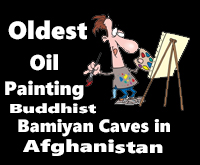
"Oil painting is the process of painting with pigments that are bound with a medium of drying oil — especially in early modern Europe, linseed oil. Often an oil such as linseed was boiled with a resin such as pine resin or even frankincense; these were called 'varnishes' and were prized for their body and gloss. Other oils occasionally used include poppyseed oil, walnut oil, and safflower oil. These oils confer various properties to the oil paint, such as less yellowing or different drying times. Certain differences are also visible in the sheen of the paints depending on the oil. Painters often use different oils in the same painting depending on specific pigments and effects desired. The paints themselves also develop a particular consistency depending on the medium.
Although oil paint was first used in western
Afghanistan sometime between the fifth and ninth centuries, it did not gain popularity until the 15th century. Its practice may have migrated westward during the Middle Ages. Oil paint eventually became the principal medium used for creating artworks as its advantages became widely known. The transition began with Early Netherlandish painting in northern Europe, and by the height of the Renaissance oil painting techniques had almost completely replaced tempera
paints in the majority of Europe." Source: Wikipedia 

Back To Top!