Some graphics reproduced using Print Shop Deluxe, Broderbund
Software, Inc. All Rights Reserved used by permission. The Classroom does not claim
all descriptions of sites to be their own words.
"No one can see their reflection in running water. It
is only in still water that we can see."
The TAO
Taoism
Definition: "A Chinese
religion and philosophy that sees the universe as engaged in
ceaseless motion and activity. All is considered to be in
continual flux. The universe is intrinsically dynamic. The
process is described in terms of Yin and Yang that should be
balanced or harmonized through yoga, meditation, etc., to
promote spiritual wholeness. According to legend, Taoism
founder Lao-tzu wrote Tao Te Ching ("The Way and Its Power")
about 550 BC." Source:
Reiki
Resource
The more
regulations there are, the poorer the people,
The more weapons there are, the greater the chaos.
Lao-Tzu
Sacred
Texts:
The
Tao Te Ching (道德經), roughly translated as The Book
of the Way and its Virtue (see chapter below on
translating the title) is an ancient Chinese
scripture originally named the Laozi. The work is
traditionally said to have been penned about 600
BC by the famous sage called Lao Zi (WG: Lao Tzu,
"Old Master"), who is said to have been a
record-keeper of the Emperor's Court of the Chou
Dynasty; but authenticity, dates and authorship
are still debated". Source:
.wikipedia
History
and Origins
"Taoism is
rooted in the oldest belief systems of China,
dating from a time when shamanism and pantheism
were prevalent. Elements of primitive Taoist
thought include the cyclic progression of seasons,
growth and death of sentient beings and their
endless generation and questions about the origin
of life."
Source:
History of Taoism
History of Tao-Tao Cultural
Center History of Tao
could be traced back to the origin of Chinese
civilization as early as ... which implies
unification of Heaven and Man, evolved into
Taoism,
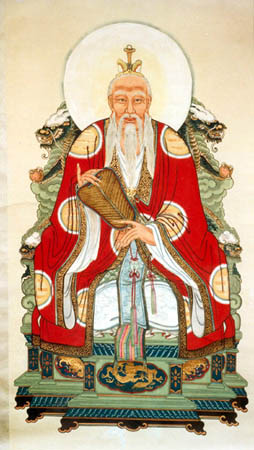
Lao Tzu | Chinese Taoist Philosopher Lucidcafé's
Profile of Lao Tzu. ... Lao Tzu was not his real
name, but an honorific given the sage, meaning
"Old Master." Lao Tzu's wise counsel attracted ...