Some graphics reproduced using Print Shop Deluxe, Broderbund
Software, Inc. All Rights Reserved used by permission. The Classroom does not claim
all descriptions of sites to be their own words.
The Classroom makes no promises or representations about the gadgets on
this site as to quality. content or performance
"The land is sacred. These words are at the core of
your being. The land is our mother, the rivers our
blood. Take our land away and we die. That is, the
Indian in us dies." Brave Bird, Mary
Native
Americans
Native
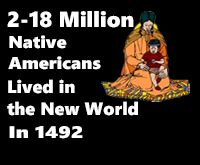
Americans first came to the New World from Asia and
rapidly migrated from Alaska all the way down to the
tip of South America. They developed very
sophisticated cultures and adapted very well to the
varied climates of both continents. When they first
greeted the European explorers and colonist they
were confused and by individuals that seemed like
"gods" to them. The Europeans took advantage of the
Native Americans and gradually forced them from
their tribal lands. After the American Revolution
the American settlers and soldiers forced them
farther and farther west until they occupied their
territory. The Native Americans resisted the
expansion but the natives soon found the American
technology and numbers were overwhelming. Today the
remaining tribes are trying to maintain their
culture and restore their dignity.
Definition: Native Americans: A member of any of the
peoples indigenous to the Americas except the
Eskimos, Aleuts, and Inuits. Source:
Answers.com
Culture
The Native American way of life is rich in tradition,
spiritual growth and history. Great effort was made by
the Europeans and Americans to destroy their
traditions by various means, It still lives on today
and there are numerous efforts to reestablish
it.
Maps
The Native
American culture stretched from the
Arctic Ocean to the Terra del Fuego of South America.
Each tribe was culturally, socially and spiritually
unique with its own defined territory with sacred land and sources
of food.
Bureau of Indian Affairs
"Indian Affairs (IA) is
the oldest bureau of the United States
Department of the Interior. Established in 1824,
IA currently provides services (directly or
through contracts, grants, or compacts) to
approximately 1.7 million American Indians and
Alaska Natives". Source:
Bureau of Indian Affairs
Time-Line
A short descriptive time line of Native American
history from their earliest treks across the
Bering Straits to their modern interaction with
the United States and other cultures.
Famous Natives
We know many of
the tribal leaders who had contact with the Europeans
and Americans however little is known of the many
individual men and women who fashioned their rich
culture.
Origins
The exact date
and method they came to the New World has been debated
but many know that the first Americans came from Asia over 35,000 years ago. They settled in villages,
towns and cities from Alaska to the tip of South
America.
History
The Native
American culture was varied and stretched from the
Arctic Ocean to the Terra del Fuego of South America.
Each tribe had territory with sacred land and sources
of food. Their history is rich with cultural, social
and spiritual development, along with many
wars and tribal decline and fall.
Religion ...
Native American belief systems include many
sacred narratives... stories are deeply based in
Nature..rich with the symbolism of seasons,
weather, plants, animals, earth, water, sky and
fire.. .. all powerful Great Spirit, a
connection to the Earth, diverse creation
narratives and collective memories of ancient
ancestors are common..."
Source:
Wikipedia
Latin America
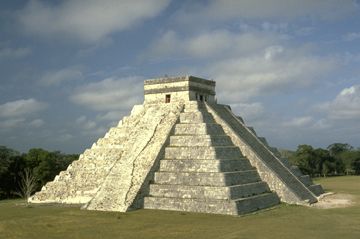
It was once
home to three great civilizations, the Mayans,
Aztecs and Inca. They had very rich cultures
with large cities, vibrant economies, and deep
seated religions. After 1492 they became the
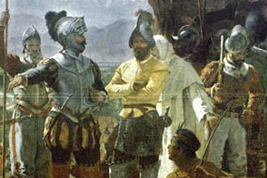
target of Spanish exploitation and soon were
subjugated by Cortez and Pizarro.
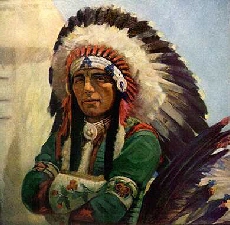
Tribes Over 300 tribes
have been recognized by the United States government.
The terms "tribe" or "band" designate a group of
Indians of the same or similar heritage united
in a community under one leadership or
government and inhabiting a particular
territory. Source:
Cornell
University Law School
Treaties and Laws The Europeans and Americans signed
numerous treaties with individual tribes in exchange
for peace. They promised to protect their rights to the natural
resources. Furthermore they guaranteed to protect them and provide them with
food and manufactured goods. Unfortunately much
of the promises made never were fulfilled.